

Here’s the thing about spending more on something: it only feels worth it when you understand what you’re actually getting.
So before we talk numbers, let’s talk about what’s inside a conventional mattress.
What’s In the Mattress You’re Sleeping on Right Now
The average mass-market mattress is built around polyurethane foam — a petroleum-based material that off-gasses volatile organic compounds (VOCs), especially when it’s new. It’s treated with chemical flame retardants to meet federal safety standards. The cover is usually a synthetic textile with its own chemical finishes.
None of this is hidden information. It’s just not information anyone goes out of their way to share with you.
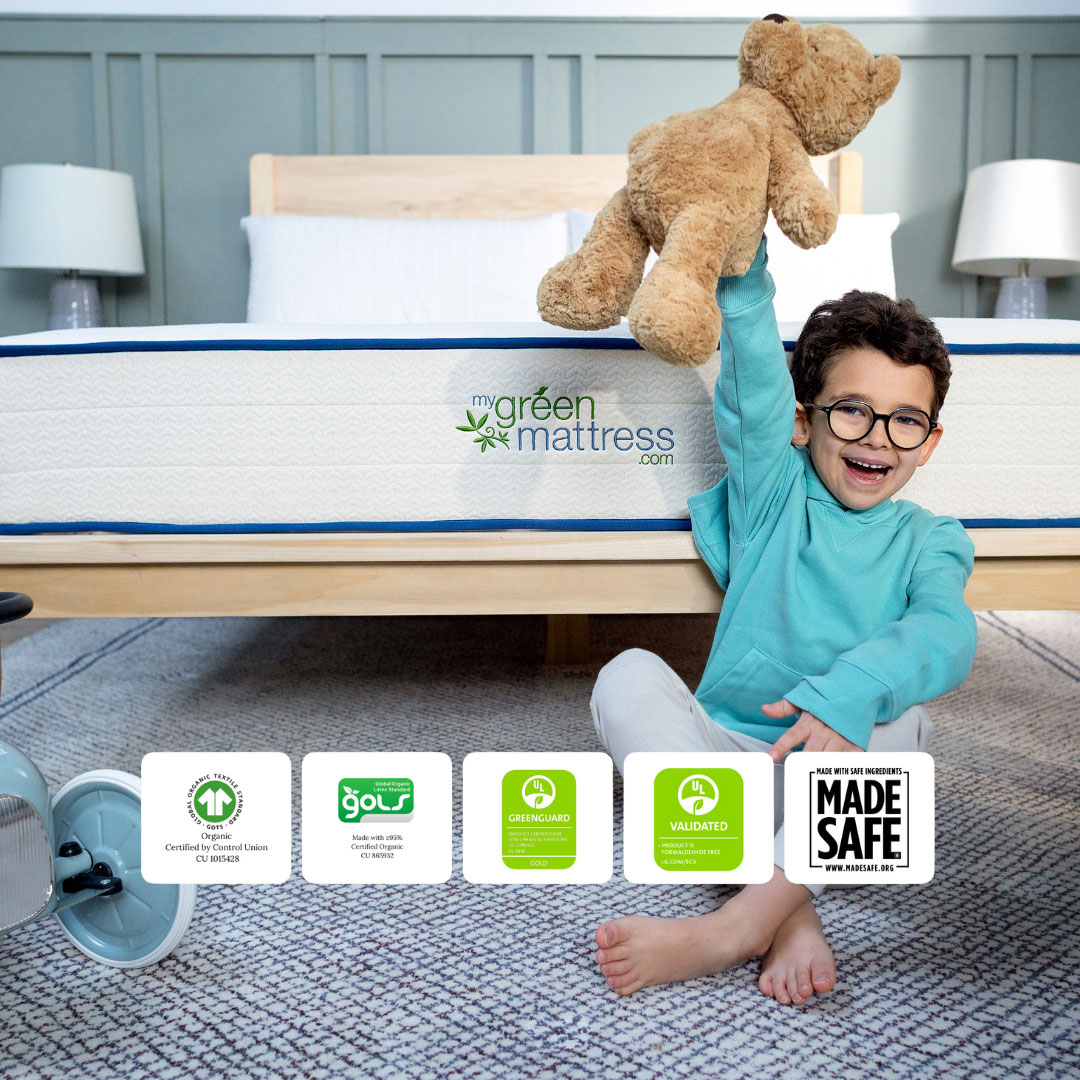
When you swap all of that for certified organic latex, wool, and cotton — materials that have been independently verified from the farm to the finished product — you’re not just buying a different mattress. You’re buying a fundamentally different mattress to spend a third of your life on.
The Long-Term Value
At first glance, an organic mattress can seem like a bigger investment than a conventional foam mattress. But the real value becomes clear over time.
Many conventional mattresses are made with synthetic foams that tend to soften, compress, and sag within just a few years. Organic mattresses made with durable materials like Dunlop latex and hand-tufted construction are designed to maintain their comfort and support much longer.
That durability matters. Replacing a lower-quality mattress multiple times over the years can ultimately cost more than investing once in a mattress built to last. And beyond the financial aspect, there’s also the convenience factor — fewer replacements, fewer delivery headaches, and less time spent researching and shopping for another mattress.
There’s also an environmental benefit. When mattresses wear out quickly, they often end up in landfills sooner. Choosing a mattress built for longevity means fewer mattresses discarded over time, making it a more sustainable choice for both your home and the planet.
A well-made organic mattress isn’t just about healthier materials and better comfort. It’s also about long-term value and reducing waste for a healthier Earth.
The Part Nobody Talks About
There’s also the question of what a cheaper mattress is actually costing you in ways that are harder to measure — the chemical exposure, the disrupted sleep as it starts to break down, the replacement cycle that keeps repeating.
For a lot of families — especially those with young kids, allergies, or anyone who’s started being more intentional about what’s in their home — those things factor in. They’re hard to put a dollar amount on, but they’re real.
How We Make It Easier
A 365-night sleep trial means you have a full year to decide if this is the right mattress for you. Sleep on it for at least 30 nights, and if it isn’t working, we’ll help you donate it to a family in need and refund you completely.
We can offer that because we make every mattress ourselves in our Illinois factory, and we know exactly what went into it.
The Honest Answer
An organic mattress might cost more upfront. Over time, it usually doesn’t — and in the meantime, you’re sleeping on something you actually feel good about.
Explore the Kiwi and Natural Escape mattresses at mygreenmattress.com.