

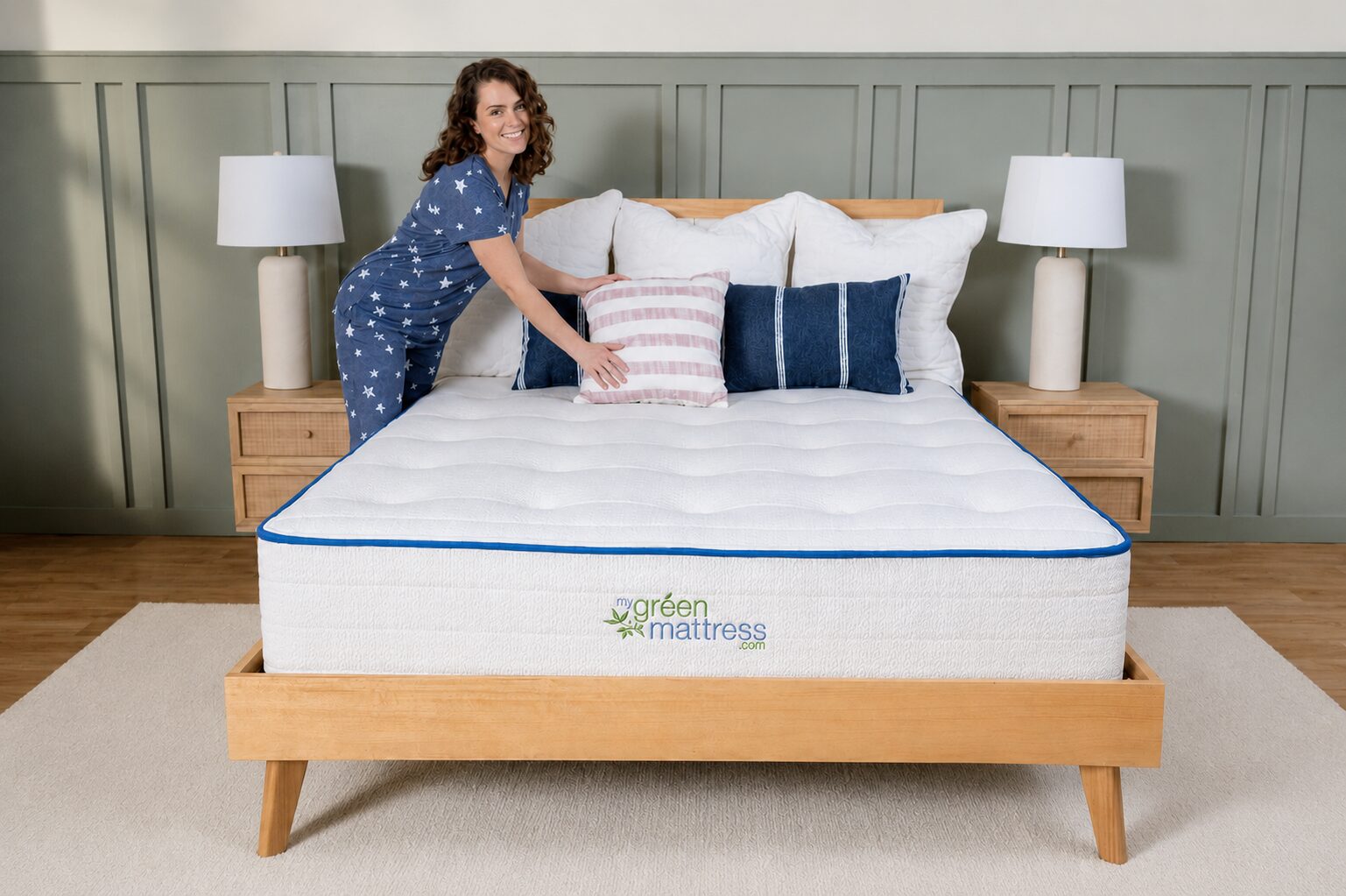
Open any home decor account on Instagram or Pinterest and you’ll find the same bedroom: Gallery wall above the bed, bold accent color, layered textiles, competing patterns, a rattan pendant light. It looks great in photographs.
It is also, quietly, a terrible place to sleep. The bedroom that performs on social media and the bedroom that performs as a sleep environment are almost always in conflict. Here’s why:
Your Brain Can’t Stop Looking
The first problem with an interesting bedroom is the most literal one: your brain keeps engaging with it.
Neuroscientists at Princeton found that multiple stimuli in the visual field at the same time compete for neural representation — your brain treats every visible object as something that might require attention.
In a visually busy room, that low-level scanning never fully stops. Research confirms that cluttered environments increase cognitive load and elevate cortisol. A UCLA study found that people in cluttered homes had measurably higher cortisol levels throughout the day than those in organized spaces.
A gallery wall is beautiful. It’s also twenty discrete visual objects doing quiet neurological work while you’re trying to wind down.
Color Is Doing More Than You Think
Warm, saturated colors — red, orange, bright yellow — activate the sympathetic nervous system: the system responsible for alertness and stress response. Research has consistently shown that red increases heart rate and physiological arousal. A Travelodge study found that people in red bedrooms averaged the least sleep of any color group surveyed.
Cool, muted tones do the opposite. The same study found that people in blue bedrooms averaged nearly eight hours per night — the most of any color. Soft greens and warm neutrals performed similarly.
Saturation matters as much as hue. A deep cobalt is not the same as a soft blue-gray. The maximalist bedroom palette (bold colors, layered patterns) is working directly against your nervous system’s ability to downshift at the end of the day.
The Bedroom Has One Job
The most restorative bedrooms share a few qualities: a limited palette of muted tones, clear surfaces, soft textiles, and an absence of things that don’t belong — work materials, screens, items that represent unfinished tasks. Every visible object is a small open loop your brain keeps running in the background. Fewer loops, faster transition to sleep.
This doesn’t mean cold or bare. Texture replaces pattern, one meaningful piece replaces a gallery wall, and warm, low light replaces overhead fixtures. Natural materials — cotton, wool, linen, wood — replace synthetic ones. The room gets quieter without getting empty.
The most interesting thing about a truly boring bedroom is what happens in it: The eight hours of rest that a low-stimulation, low-cortisol environment quietly makes possible every single night.
It won’t perform on Instagram, but it will perform considerably better while you’re sleeping.