

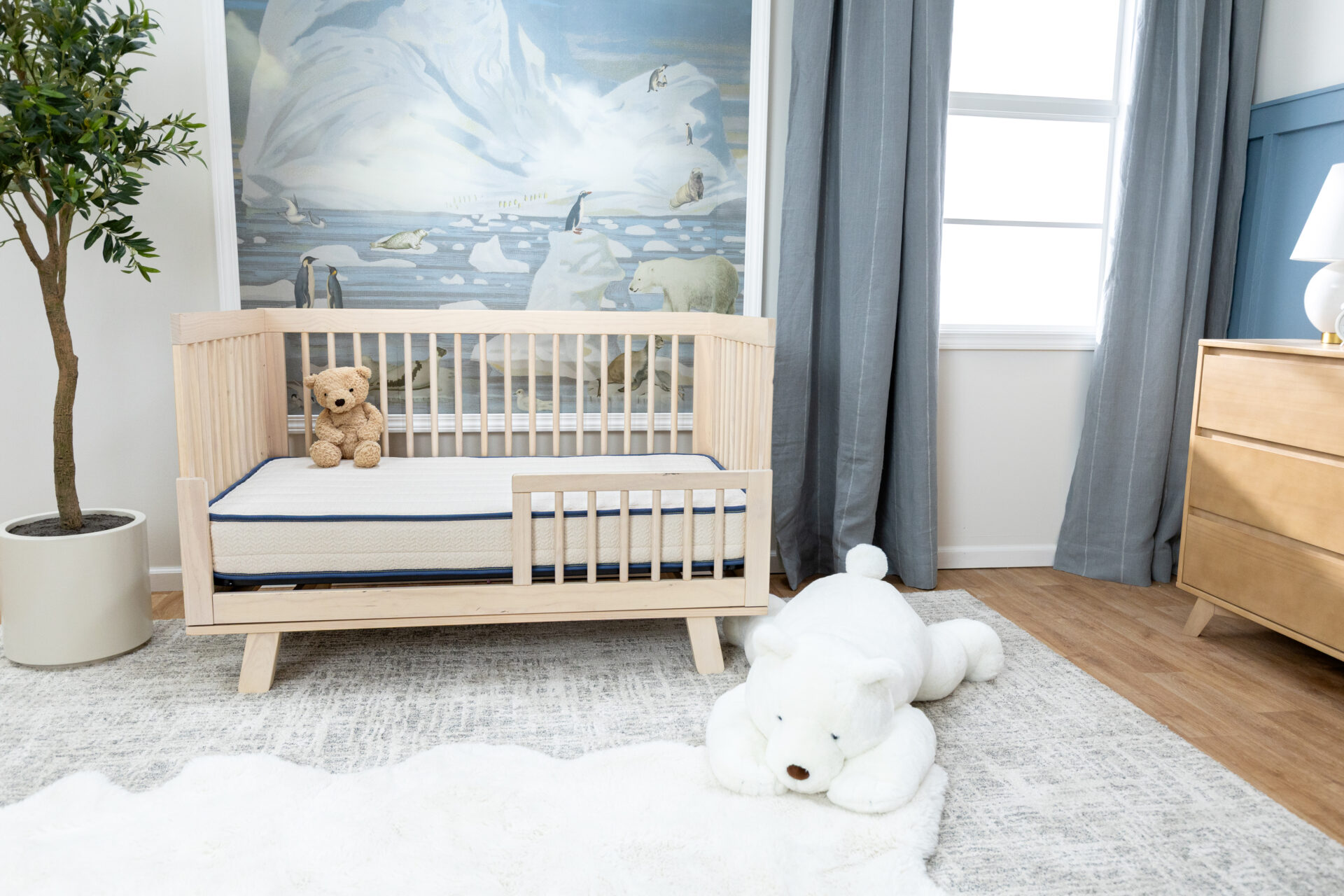
Whether you’re building a nursery from scratch or quietly reconsidering the one you already have, the instinct driving you here is a good one. Babies spend up to 17 hours a day sleeping. What surrounds them during those hours matters more than almost anything else you’ll choose for their room.
The good news: you don’t have to overhaul everything at once. You just have to start in the right place.
Start With the Mattress
If you do nothing else, do this. A baby’s developing body is more vulnerable to chemical exposure than an adult’s — their skin is thinner, their respiratory systems are still maturing, and they’re in close contact with their sleep surface for most of the day. A conventional crib mattress built with synthetic foam, chemical flame retardants, and synthetic fabric covers is exactly the wrong environment for all of that.
The Emily Organic Crib Mattress is the mattress that started My Green Mattress. Tim Masters built it for his daughter when he couldn’t find anything safe enough for her sensitive skin, and it’s been the foundation of everything we’ve made since.
It’s built with GOTS-certified organic cotton and wool, GOLS-certified organic coconut coir, and covered in breathable organic fabric. No chemical flame retardants, no synthetic foam, no fiberglass. It’s GREENGUARD Gold certified, which means it’s been tested against over 10,000 chemical emissions.
Then the Bedding
A great crib mattress deserves great protection. Our Organic Cotton Mattress Protector creates a barrier against moisture and allergens without synthetic coatings or chemical treatments — and it’s washable, which matters more than people realize. Keeping a baby’s sleep surface genuinely clean is one of the most effective things you can do for their health.
For sheets, look for GOTS-certified organic cotton. Soft, breathable, and free from the chemical finishes that conventional cotton textiles carry into the finished product.
The Rest of the Room
Once the sleep environment is handled, here’s how to think about everything else.
Paint
Conventional paints off-gas VOCs for months after application. Nurseries are often freshly painted right before a baby arrives, which is exactly the wrong time to introduce chemical emissions into a small, often poorly ventilated room. Look for zero-VOC or low-VOC paint from brands that are transparent about their formulations.
Furniture
Most flat-pack furniture is made with pressed wood and adhesives that off-gas formaldehyde. Solid wood furniture — especially pieces that are finished with water-based or natural oils — is a meaningfully better choice. If budget is a constraint, prioritize the crib itself and let other pieces be lower stakes.
Flooring and rugs
Wall-to-wall carpet traps allergens and is often treated with stain-resistant chemicals. Hard floors with a washable organic cotton or wool rug are easier to keep genuinely clean. If carpet is already there, a good HEPA vacuum used consistently goes a long way.
Air quality
A HEPA air purifier in the nursery is one of the higher-return investments you can make. Babies breathe faster than adults, which means they’re taking in more of whatever is in the air around them.
You Don’t Have to Do It All at Once
A non-toxic nursery isn’t an all-or-nothing project. Every swap matters, and the sleep environment — the mattress, the protector, the sheets — is where the hours add up fastest.
Explore the Emily Organic Crib Mattress and our full organic bedding line at mygreenmattress.com.