

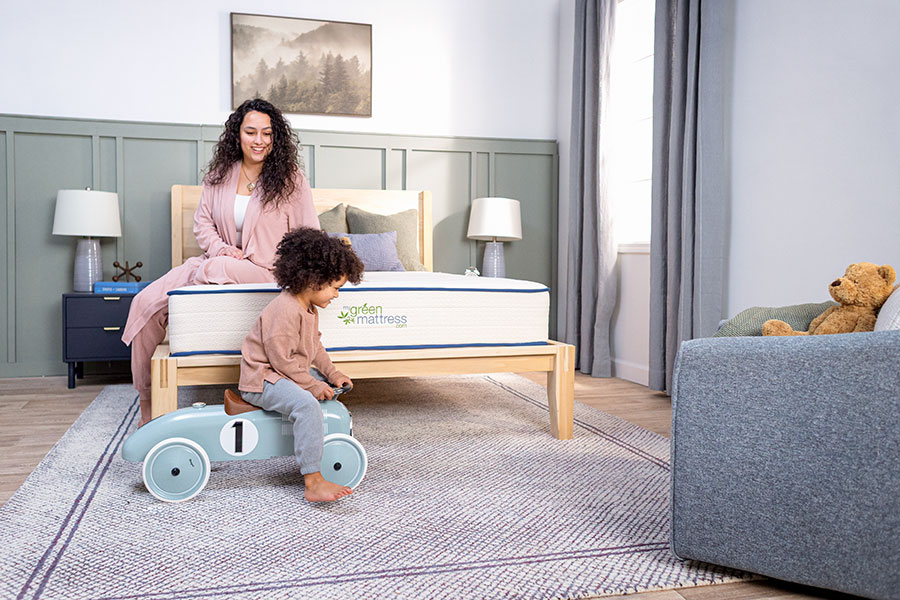
Every parent knows the basic equation: a tired kid is a cranky kid. Skip a nap, push bedtime late for one night, and you’ll pay for it within the hour. That part isn’t news to anyone.
What’s less well known is what happens when late or inconsistent bedtimes aren’t a one-off, but a pattern. The research on that is more specific, and more worth paying attention to, than most parents realize.
The Study That Changed How Researchers Think About Kids’ Bedtimes
In 2013, researchers at University College London published a study in the journal Pediatrics that tracked bedtime patterns in more than 10,000 children at ages three, five, and seven, using data from the UK’s Millennium Cohort Study. They compared children’s bedtime consistency against behavior reports from both mothers and teachers.
The results were clear: children with irregular bedtimes had more behavioral difficulties, including hyperactivity, conduct problems, and trouble with peers, than children with consistent bedtimes. It didn’t matter much whether bedtime was early or late. What mattered was whether it was the same time night to night.
The lead researcher, Professor Yvonne Kelly, described the effect in a way that sticks with an adult: a body and mind in a constant state of flux from irregular bedtimes ends up in a condition similar to jet lag. And just like jet lag, it disrupts circadian rhythms in a way that affects brain development and the ability to regulate behavior and emotion.
Maybe the most important detail in the study: these effects compounded over time. Kids who’d always had irregular bedtimes were worse off than those who occasionally kept a schedule. But when children switched to a more consistent bedtime, their behavior improved. This isn’t a life sentence. It’s a pattern that responds to change.
Why This Reaches Further Than Behavior
Bedtime consistency isn’t just tied to acting out. A growing body of research connects consistent, sufficient sleep to executive functioning in young children specifically: working memory, impulse control, and cognitive flexibility, the skills that underlie everything from following instructions to managing frustration. Studies using actigraphy, which objectively tracks sleep through movement rather than relying on parent reports, have found that preschoolers with better sleep efficiency perform meaningfully better on tasks measuring inhibition and working memory.
None of this requires a dramatic sleep problem to show up. It’s the accumulation of small, everyday inconsistency that adds up over months and years.
Building a Routine Kids Can Actually Keep
A workable bedtime is one the whole family can realistically maintain most nights, not just the nights that happen to be convenient. Consistency matters more than the exact hour on the clock, so pick a time that fits your family’s rhythm and protect it.
The sleep environment matters here too. A room that’s too bright, too warm, or a mattress your child has outgrown can all work against an otherwise solid routine. My Green Mattress’s kids’ mattress line is built specifically around that: organic materials designed to support a child’s changing body without the synthetic materials that can make a room feel less restful than it should.
The bedtime fight is real, and most parents have had it. But the research is a good reminder that showing up for that fight consistently, even imperfectly, is doing more for your kid than it might feel like in the moment.