

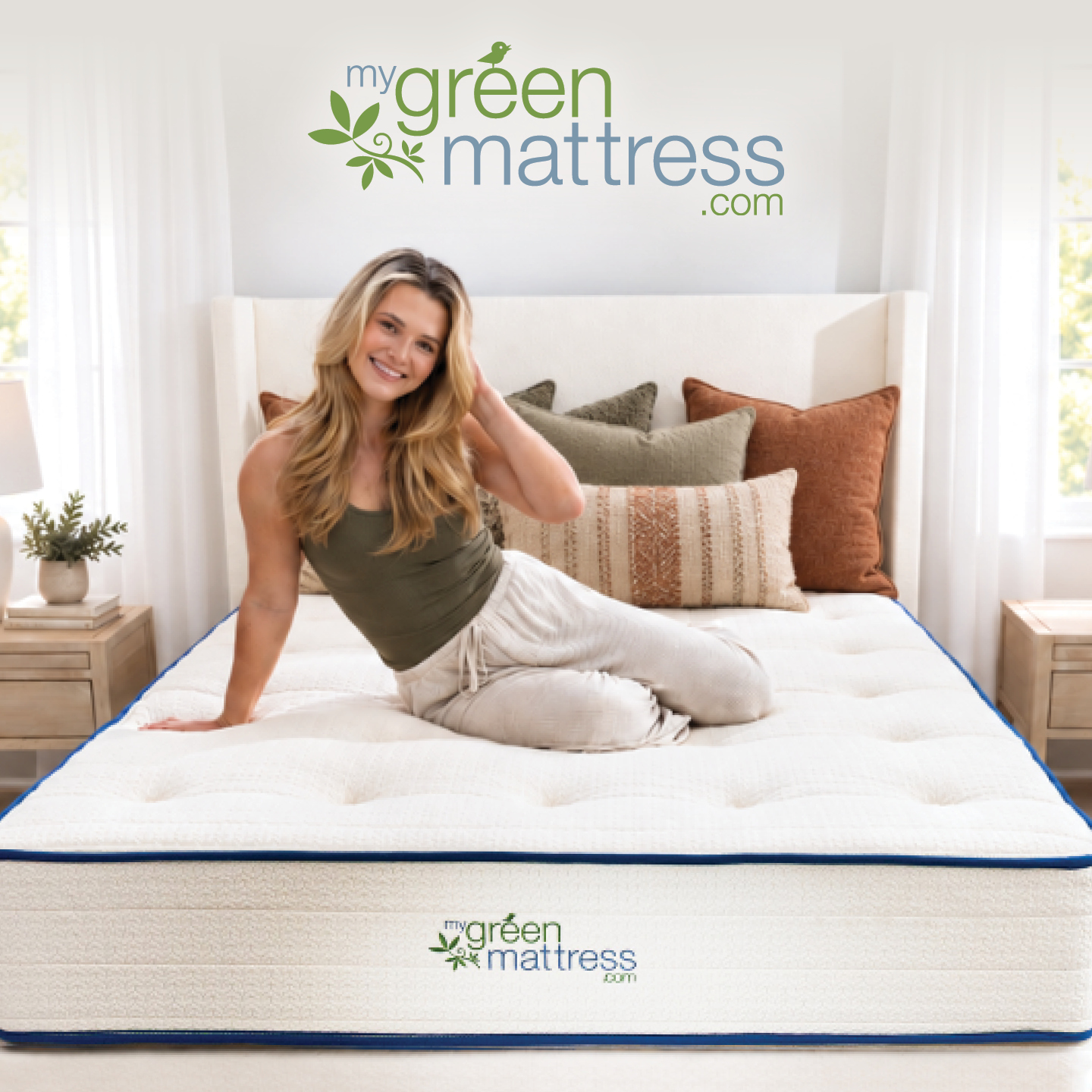
As the weather cools and we settle into fall routines, it’s a great time to make your bedroom a healthier, more comfortable place to recharge.
From October 2–13, 2026, the My Green Mattress Fall Into Organic Sleep Sale makes it easier to upgrade your family’s sleep with special savings on our certified organic mattresses, crib mattresses, bedding and accessories.
During the sale, you can save up to $250 on adult and kids’ mattresses, plus 15% on crib mattresses and accessories.
Fall Into Organic Sleep Sale Savings
Here’s what you can save October 2–13:
- King mattresses – $250 off
- Queen & Full mattresses – $175 off
- Twin & Twin XL mattresses – $100 off
- Crib mattresses & accessories – 15% off
Whether you’re shopping for yourself, a growing child or a new baby, there’s an organic sleep option for nearly every member of the family.
Kiwi Organic Mattress – Starting at $674
Our Kiwi Organic Mattress is our best-selling and most versatile organic mattress, making it a great choice for kids, teens and adults.
The Kiwi features 2 inches of GOLS-certified organic latex paired with our custom 7-zone pocketed coil spring system, designed to provide targeted lumbar support and reinforced edge support. A quilted cover made from GOTS-certified organic cotton and wool completes the mattress without polyurethane foam, fiberglass or chemical flame retardants.
With its balanced, medium feel, the Kiwi is an excellent choice for a first big-kid mattress, a teen’s room, an adult bedroom or a guest room.
Fall Sale pricing starts at just $674.
Natural Escape Organic Mattress – More Comfort and Support
Looking for an upgrade with additional organic latex and support? Our Natural Escape Organic Mattress is designed with adults and couples in mind.
The Natural Escape features 3 inches of GOLS-certified organic latex and up to 1,462 individually pocketed coils, including enhanced lumbar and edge support. The result is a supportive, medium-firm feel with additional cushioning and pressure relief.
Like all of our organic mattresses, the Natural Escape is finished with GOTS-certified organic cotton and wool and is hand button tufted for durable construction without relying on adhesives to hold the mattress layers together.
Save up to $250 on the Natural Escape during the Fall Into Organic Sleep Sale.
Pure Eco Organic Kids Mattress – Starting at $594
Kids deserve high-quality organic materials, too.
Our Pure Eco Organic Kids Mattress brings premium organic materials and supportive mattress construction to a lower-profile design created with growing kids in mind.
At just 8 inches tall, the Pure Eco is a great option for first big-kid beds, bunk beds, trundles and guest rooms. It combines GOLS-certified organic latex with individually pocketed coils, plus GOTS-certified organic cotton and wool.
And while we designed the Pure Eco with kids in mind, its supportive construction makes it suitable for adults, too.
During the Fall Sale, the Pure Eco Organic Kids Mattress starts at just $594.
Save 15% on the Emily Organic Crib Mattress
Creating a healthier sleep space can start from youe baby’s very first mattress.
The Emily Organic Crib Mattress is made with GOTS-certified organic cotton and wool, organic coconut coir and a supportive innerspring system.
Its two-sided design is made to support your child from infancy through the toddler years, giving families a long-lasting organic option for the crib.
Save 15% on the Emily Organic Crib Mattress during the Fall Into Organic Sleep Sale.
Complete Your Organic Bedroom and Save 15%
A healthier sleep environment doesn’t stop with your mattress.
During the sale, you’ll also save 15% on bedding and accessories, including organic cotton sheets and mattress protectors, organic latex pillows and mattress toppers, foundations, and solid wood platform beds.
It’s an opportunity to refresh more of your sleep space while taking advantage of fall savings.
Why Choose My Green Mattress?
Since 2007, My Green Mattress has focused on making high-quality organic mattresses accessible to more families.
Our mattresses are handcrafted using thoughtfully selected U.S. and global materials. By designing and manufacturing our own pocketed coil spring systems, we’re able to maintain greater control over the support, construction and quality of our mattresses.
Our mattresses also carry leading organic and safety certifications, including GOTS, GOLS, MADE SAFE® and GREENGUARD Gold.
And every adult and kids’ mattress includes:
- 365-night sleep trial
- 20-year warranty
- Free FedEx shipping within the contiguous United States
Fall Into Better Sleep Before October 13
If you’ve been waiting to replace an old mattress, move your child into a new bed or create a healthier sleep environment, fall is a great time to make the change.
The Fall Into Organic Sleep Sale runs October 2–13, 2026, with savings of up to $250 on organic mattresses and 15% off crib mattresses and accessories.