


More routines. More trackers. More supplements. More rules. For years, better sleep has been framed as something you add to your life. But in 2026, the trend is shifting in the opposite direction. Sleep minimalism is gaining traction as people realize that calmer nights often come from doing less, not more.
Sleep minimalism is about removing friction, reducing stimulation, and choosing fewer, higher-quality habits and products that actually support rest. Here’s how to simplify your nights and build a routine that feels quieter, easier, and more sustainable.
Why Sleep Minimalism Is Trending
Burnout, screen fatigue, and wellness overload have pushed many people to rethink their nighttime routines. Instead of stacking tools and tracking every metric, sleep minimalism focuses on consistency, environment, and nervous system calming.
At its core, it asks a simple question: What actually helps me sleep better, and what just adds noise?
For most people, the answer is surprisingly basic.
Start by Decluttering Your Evenings
Mental clutter often mirrors physical clutter. A packed evening schedule, constant notifications, and visual noise keep your brain alert long after you want to sleep.
A minimalist nighttime routine starts with subtraction:
- Stop checking emails and messages late at night
- Reduce decision-making after dinner
- Clear surfaces in your bedroom
- Remove items that don’t belong in a sleep space
A calmer environment gives your nervous system fewer signals to process.
Create a Tech-Free Wind-Down Window
One of the most consistent sleep disruptors is evening screen use. Sleep minimalism doesn’t require perfection, just boundaries.
Try a simple rule: Choose a tech-free window 30 to 60 minutes before bed.
Replace scrolling with low-effort activities that don’t stimulate your brain:
- Light reading
- Gentle stretching
- Listening to calming music or a podcast
- Preparing for the next day
The goal is not productivity. It’s predictability.
Choose Fewer, Better Sleep Essentials
Sleep minimalism also applies to what’s on your bed. Over-layering, synthetic materials, and heat-trapping fabrics can make sleep feel restless instead of cozy.
Focus on fewer, higher-quality essentials:
- Breathable sheets made from natural fibers
- One or two adjustable layers instead of a heavy pile
- A cooling pillow and organic bedding that won’t trap heat or moisture
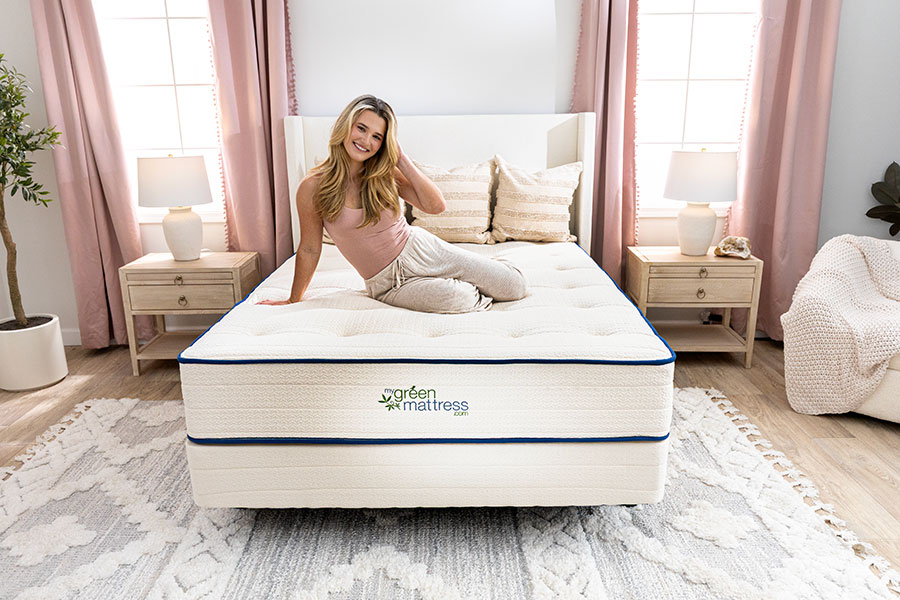
Materials like organic cotton, wool, and natural latex regulate temperature better than synthetic options, helping your body stay comfortable without constant adjustment. Mattresses and bedding designed with breathability in mind support this minimalist approach by doing their job quietly in the background.
By decluttering your evenings, limiting stimulation, and investing in a few well-chosen sleep essentials, you create space for rest to happen naturally. In 2026, better sleep looks quieter, simpler, and more sustainable. And often, the best thing you can do for your nights is stop doing so much.